VARSHA BABYMARKETING · PERSONAL EDITIONOVERALL0%
0% read
Mind Map
UNIT II · Simple English · Complete PDF study notes

Product Decisions

Learn how businesses design, classify, develop and improve products and services. Every section follows the supplied lecture material, with a clear meaning, useful examples and slide references.

Select a chapter above. Scroll down to read the notes in order.
YOUR PERSONAL READING EDITION

Varsha Baby is 0% complete.

Across all six chaptersThis chapter · 0%

Based on how far you've read. Saved automatically on this device.

What this chapter contains

Made for understanding the material from the beginning, not just memorising headings.

Lecture PDF pages51
Study sections17
Important concepts64

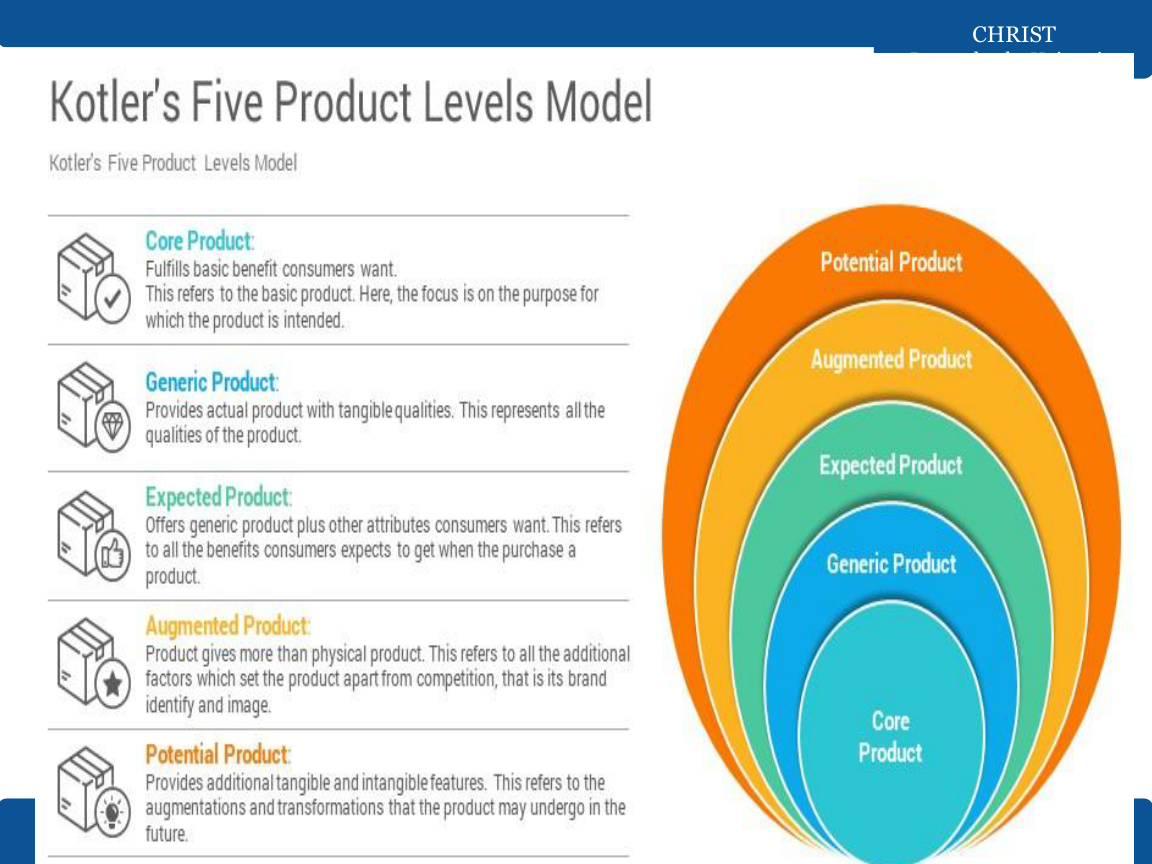
Kotler’s five product levels

Kotler’s five product levels
Original lecture diagram · PDF page 4. Kotler’s five product levels · Open page

Core product level

UNDERSTAND THE IDEA

The core product is the main benefit the buyer really wants. Someone paying for a hotel room is primarily buying a place to sleep safely; the furniture is a way of delivering that benefit.

IN REAL LIFE

A hotel guest books a room to rest safely after a long journey. Rest and shelter are the fundamental benefits being purchased.

Generic product level

UNDERSTAND THE IDEA

The generic product is the basic version of the offering that makes the core benefit possible. For a hotel stay this means a room, a bed, a bathroom and the essential facilities, without any added luxury.

IN REAL LIFE

A hotel offers a bed, bathroom, desk and working door lock. These tangible elements make the core lodging service possible.

Expected product level

UNDERSTAND THE IDEA

The expected product includes the normal features a customer assumes will be provided. A hotel guest expects a clean room, a working bathroom and a safe place to stay. These conditions are expected, not special bonuses.

IN REAL LIFE

Before arrival, a guest assumes the hotel room will be clean and the booking honoured. These are normal attributes the buyer expects.

Augmented product level

UNDERSTAND THE IDEA

The augmented product adds extra benefits beyond what the customer ordinarily expects. For example, complimentary airport pickup or unusually helpful service can make one hotel stand out from another.

IN REAL LIFE

A hotel offers free airport pickup and flexible checkout beyond the ordinary booking. The additional benefits distinguish its offer.

Potential product level

UNDERSTAND THE IDEA

The potential product refers to improvements that an offering might gain in the future. A hotel may later introduce smart room controls or new personalised services. It is about future possibilities, not features that already exist.

IN REAL LIFE

A hotel considers adding automated room controls and personalised arrival services in the future. The future possibilities go beyond today’s offer.

See the original lecture slides and exact terminology

Original PDF page links are supplied for verification. Some slides use diagrams or split their sentences across lines; the linked PDF is authoritative.

  • View this page in the original lecturer PDF (includes its exact text and diagrams).
  • View this page in the original lecturer PDF (includes its exact text and diagrams).
  • View this page in the original lecturer PDF (includes its exact text and diagrams).
  • View this page in the original lecturer PDF (includes its exact text and diagrams).

Product meaning and characteristics

Product definition

UNDERSTAND THE IDEA

A product is anything offered to customers to satisfy a need or want. It can be a physical object, a service or another offering. When someone buys a pen, the important benefit is being able to write, not just owning a plastic object.

IN REAL LIFE

A student buys a pen because it helps write exams and assignments. Its functional benefits matter more than its packaging alone.

Product characteristics

UNDERSTAND THE IDEA

Product characteristics are the qualities that describe how a product looks, works and performs. They include features such as material, size, durability, quality and design. Customers compare these details to decide which product suits them.

IN REAL LIFE

A cookware producer tests handle safety, material strength and ease of cleaning before offering a new pan. Features and performance affect buyers' assessment of a product.

Product classification approaches

UNDERSTAND THE IDEA

Product classification means grouping products according to how and why they are bought. Consumer goods are bought for personal use; industrial goods are used by organisations. Consumer goods can also be grouped by how much effort buyers spend choosing them.

IN REAL LIFE

A stationery chain separates goods bought by households from equipment bought by offices. Different classification systems serve different marketing decisions.

See the original lecture slides and exact terminology

Original PDF page links are supplied for verification. Some slides use diagrams or split their sentences across lines; the linked PDF is authoritative.

  • View this page in the original lecturer PDF (includes its exact text and diagrams).
  • View this page in the original lecturer PDF (includes its exact text and diagrams).
  • View this page in the original lecturer PDF (includes its exact text and diagrams).

Consumer products: four categories

Convenience products

UNDERSTAND THE IDEA

Convenience goods are bought frequently and with little planning or comparison. Everyday groceries and soap are typical examples because customers want them nearby and quickly.

IN REAL LIFE

A shopper picks up toothpaste during a routine grocery visit. The low-effort purchase is frequent and familiar.

Shopping products

UNDERSTAND THE IDEA

Shopping goods are items customers usually compare on quality, features, style or price before buying. Choosing a refrigerator may involve visiting several stores and reading reviews.

IN REAL LIFE

A family visits several stores to compare sofa size, comfort and price. The buyer actively compares alternatives.

Speciality products

UNDERSTAND THE IDEA

Specialty goods have a unique identity or features for which customers are willing to make a special buying effort. Customers may travel or wait for their preferred brand.

IN REAL LIFE

A photographer travels to a particular authorised shop for a preferred professional lens. A strong preference justifies special purchasing effort.

Unsought products

UNDERSTAND THE IDEA

Unsought goods are things people do not normally think of buying or may not know they need. They often require extra information or personal selling to build awareness.

IN REAL LIFE

A customer starts comparing home fire alarms only after attending a building-safety workshop. The product was not previously being sought.

See the original lecture slides and exact terminology

Original PDF page links are supplied for verification. Some slides use diagrams or split their sentences across lines; the linked PDF is authoritative.

  • View this page in the original lecturer PDF (includes its exact text and diagrams).
  • View this page in the original lecturer PDF (includes its exact text and diagrams).
  • View this page in the original lecturer PDF (includes its exact text and diagrams).
  • View this page in the original lecturer PDF (includes its exact text and diagrams).

Industrial product classifications

Materials and parts

UNDERSTAND THE IDEA

Materials and parts become part of the finished product or are used directly in making it. A furniture maker's timber and screws are examples of industrial materials.

IN REAL LIFE

A bicycle factory purchases tyres and metal frames for assembly. These inputs become part of its finished product.

Capital items

UNDERSTAND THE IDEA

Capital items are long-term assets that help an organisation produce or operate, such as machines and buildings. Businesses evaluate their cost over years of use, not just at purchase.

IN REAL LIFE

A bakery buys a commercial oven for years of daily use. It is a major productive asset rather than an ingredient.

Supplies and business services

UNDERSTAND THE IDEA

Supplies and business services support daily operations without becoming part of the final product. Cleaning supplies, maintenance and accounting services are examples.

IN REAL LIFE

An office regularly orders cleaning materials and contracts professional maintenance. Both support operations without becoming the final product.

See the original lecture slides and exact terminology

Original PDF page links are supplied for verification. Some slides use diagrams or split their sentences across lines; the linked PDF is authoritative.

  • View this page in the original lecturer PDF (includes its exact text and diagrams).
  • View this page in the original lecturer PDF (includes its exact text and diagrams).
  • View this page in the original lecturer PDF (includes its exact text and diagrams).
  • View this page in the original lecturer PDF (includes its exact text and diagrams).
05 · Product Decisions

Eight stages of new-product development

Idea generation

UNDERSTAND THE IDEA

Idea generation is the search for possible new products or improvements. Businesses can gather ideas from customers, employees, competitors and research before deciding which are promising.

IN REAL LIFE

A snack company asks customers and staff to suggest possible new flavours. It collects a broad pool of product ideas before selection.

Idea screening

UNDERSTAND THE IDEA

Idea screening checks early ideas to remove those that are impractical or unsuitable. This prevents a business from spending heavily on an idea that does not fit customer needs or resources.

IN REAL LIFE

The snack team discards flavours that cannot be manufactured consistently or affordably. Weak ideas are eliminated early.

Concept development and testing

UNDERSTAND THE IDEA

Concept development turns an idea into a clear description of a product and its benefits. Concept testing then asks potential buyers how they understand and react to it before building the full product.

IN REAL LIFE

A snack company shows buyers a description of a possible low-sugar product before production. Reactions reveal whether the idea appeals to the intended market.

Marketing strategy development

UNDERSTAND THE IDEA

Marketing strategy development sets out the target market, intended positioning, expected sales and marketing approach for a proposed product. It connects the idea to a realistic market plan.

IN REAL LIFE

A new snack team defines its first customers, positioning and distribution plan. It decides how the proposed product would enter the market.

Business analysis

UNDERSTAND THE IDEA

Business analysis estimates likely costs, sales and profits before significant investment. A product can appeal to customers but still fail financially if production is too expensive.

IN REAL LIFE

The product team forecasts likely demand and estimates packaging, manufacturing and launch costs. It evaluates the proposed business case before spending more.

Product development

UNDERSTAND THE IDEA

Product development converts a selected concept into an actual product or workable prototype. Designers and engineers test safety, performance and quality before commercial release.

IN REAL LIFE

Food technicians turn the selected snack concept into trial production samples. A written idea becomes something usable and testable.

Test marketing

UNDERSTAND THE IDEA

Test marketing introduces a new product in a limited real-world setting before a wider launch. It helps reveal customer reactions, operational problems and unexpected costs.

IN REAL LIFE

A beverage producer introduces a new flavour in two neighbourhoods before a national rollout. A limited real market tests customer response.

Commercialisation

UNDERSTAND THE IDEA

Commercialisation is the full market launch after a product has been developed and tested. Management decides when, where and how to release and promote it.

IN REAL LIFE

After successful trials, the manufacturer distributes the drink nationwide. The product enters full-scale market introduction.

See the original lecture slides and exact terminology

Original PDF page links are supplied for verification. Some slides use diagrams or split their sentences across lines; the linked PDF is authoritative.

  • View this page in the original lecturer PDF (includes its exact text and diagrams).

Six categories of new products

New-to-the-world products

UNDERSTAND THE IDEA

New-to-the-world products introduce an offering that creates or substantially changes a market. Customers may need more explanation because they have no familiar reference.

IN REAL LIFE

Engineers release a device that solves a problem customers could not previously address in that way. It creates a genuinely new type of offering.

New product lines

UNDERSTAND THE IDEA

A new product line lets a business enter a product category it did not previously offer. It is new to that company even if competitors already sell similar products.

IN REAL LIFE

A company known for footwear begins producing bags for the first time. It enters a category new to the company.

Additions to product lines

UNDERSTAND THE IDEA

Additions expand an existing product range with more sizes, flavours or versions. The new option serves another preference while staying in the same overall category.

IN REAL LIFE

An existing tea brand adds a ginger-flavoured variant to its range. The offer extends an established product line.

Improvements and revisions

UNDERSTAND THE IDEA

Improvements and revisions change an existing product to improve its quality, performance or usefulness. The core product remains recognisable instead of becoming a wholly new category.

IN REAL LIFE

A fan manufacturer redesigns a model to use less electricity. The existing product is improved rather than completely replaced.

Repositioning

UNDERSTAND THE IDEA

Repositioning changes how a product is presented to a target market or which customers it aims to attract. The business may alter communication, packaging or features to support the new position.

IN REAL LIFE

A drink originally promoted to athletes is later marketed to busy office commuters. Its intended market meaning changes.

Cost reductions

UNDERSTAND THE IDEA

Cost reduction products provide comparable value at a lower production cost or selling price. The objective is to improve affordability or profitability without losing essential functions.

IN REAL LIFE

A packaging firm redesigns a box to use less material without reducing protection. It offers similar value with lower production cost.

See the original lecture slides and exact terminology

Original PDF page links are supplied for verification. Some slides use diagrams or split their sentences across lines; the linked PDF is authoritative.

  • View this page in the original lecturer PDF (includes its exact text and diagrams).
  • View this page in the original lecturer PDF (includes its exact text and diagrams).
  • View this page in the original lecturer PDF (includes its exact text and diagrams).

Product Life Cycle: development

INTERACTIVE EXPLANATIONChoose a stage

Product life cycle

SalesTime →IntroductionGrowthMaturityDecline

The product is new. Awareness and sales are usually low while the business introduces it.

Product Life Cycle framework

UNDERSTAND THE IDEA

The product life cycle describes how a product’s sales typically change over time. It moves through introduction, growth, maturity and decline. These are not fixed time periods: some products move quickly and others stay popular for years.

IN REAL LIFE

A music format is launched, becomes popular, stabilises and later loses demand to new technology. Sales patterns can be understood through life-cycle stages.

Product development stage

UNDERSTAND THE IDEA

The development stage happens before a new product reaches customers. Research and production costs occur, but there is normally no sales revenue from the product yet.

IN REAL LIFE

A firm pays researchers to build a prototype but has not started selling it. Costs occur before market sales begin.

See the original lecture slides and exact terminology

Original PDF page links are supplied for verification. Some slides use diagrams or split their sentences across lines; the linked PDF is authoritative.

  • View this page in the original lecturer PDF (includes its exact text and diagrams).
  • View this page in the original lecturer PDF (includes its exact text and diagrams).

PLC: introduction and launch strategy

PLC introduction stage

UNDERSTAND THE IDEA

Introduction is the stage when a product first enters the market. People may not know about it yet, so sales are usually low while the business spends money creating awareness and arranging distribution.

IN REAL LIFE

A new reusable bottle brand enters shops with few customers who recognise its name. Sales are initially low while awareness is created.

Introduction-stage marketing strategies

UNDERSTAND THE IDEA

During introduction, businesses prioritise awareness, trial and basic distribution because most customers are unfamiliar with the product. Promotion may be high relative to early sales.

IN REAL LIFE

A new bottled drink brand funds sampling and retailer training at launch. It invests in awareness and trial before mass demand exists.

See the original lecture slides and exact terminology

Original PDF page links are supplied for verification. Some slides use diagrams or split their sentences across lines; the linked PDF is authoritative.

  • View this page in the original lecturer PDF (includes its exact text and diagrams).
  • View this page in the original lecturer PDF (includes its exact text and diagrams).

PLC: growth stage strategies

PLC growth stage

UNDERSTAND THE IDEA

Growth begins when more buyers discover and accept the product. Sales rise and competitors may enter. The business often improves availability, quality and promotion to keep growing.

IN REAL LIFE

An electric scooter attracts growing numbers of buyers after positive early reviews. Sales rise as wider adoption begins.

Growth-stage marketing strategies

UNDERSTAND THE IDEA

During growth, businesses strengthen distribution and improve the offer while demand expands. They may enter additional segments or adjust promotion as competitors arrive.

IN REAL LIFE

A scooter maker adds dealers and improves the battery warranty as sales rise. It protects the brand while trying to reach new customers.

See the original lecture slides and exact terminology

Original PDF page links are supplied for verification. Some slides use diagrams or split their sentences across lines; the linked PDF is authoritative.

  • View this page in the original lecturer PDF (includes its exact text and diagrams).
  • View this page in the original lecturer PDF (includes its exact text and diagrams).

PLC: maturity stage strategies

PLC maturity stage

UNDERSTAND THE IDEA

Maturity occurs when a product is well established and sales growth slows. Many competitors may be present. Businesses try to defend their customers, improve features or find new uses.

IN REAL LIFE

Most local households already own a washing machine, and replacements drive sales. Market growth slows as the category becomes established.

Maturity-stage marketing strategies

UNDERSTAND THE IDEA

During maturity, sales growth slows and competition becomes stronger. Firms defend market share by improving the product, finding new users or adjusting the marketing mix.

IN REAL LIFE

A mature soap brand refreshes packaging and offers several sizes. The firm seeks preference and repeat purchases in a crowded market.

See the original lecture slides and exact terminology

Original PDF page links are supplied for verification. Some slides use diagrams or split their sentences across lines; the linked PDF is authoritative.

  • View this page in the original lecturer PDF (includes its exact text and diagrams).
  • View this page in the original lecturer PDF (includes its exact text and diagrams).

PLC: decline stage strategies

PLC decline stage

UNDERSTAND THE IDEA

Decline happens when sales start to fall over time. Buyers may switch to newer products or their needs may change. The company decides whether to improve, reduce investment in or discontinue the product.

IN REAL LIFE

Demand for DVD rentals falls as households switch to streaming. A changing technology reduces sales of the older offering.

Decline-stage marketing strategies

UNDERSTAND THE IDEA

During decline, firms review whether to maintain, simplify, reposition or withdraw the offering. The right choice depends on remaining demand, costs and strategic value.

IN REAL LIFE

A company stops advertising obsolete accessories and sells remaining stock carefully. It chooses how to manage a shrinking product line.

See the original lecture slides and exact terminology

Original PDF page links are supplied for verification. Some slides use diagrams or split their sentences across lines; the linked PDF is authoritative.

  • View this page in the original lecturer PDF (includes its exact text and diagrams).
  • View this page in the original lecturer PDF (includes its exact text and diagrams).

Diffusion, styles, fashions and fads

Diffusion of innovation

UNDERSTAND THE IDEA

Diffusion of innovation describes how a new idea or product spreads from early experimenters to wider groups over time. Communication, perceived value and social influence affect the pace.

IN REAL LIFE

A contactless payment tool spreads from early trial users to mainstream retailers over several years. Different buyer groups adopt at different times.

Style product pattern

UNDERSTAND THE IDEA

A style is a basic form of expression that may remain popular for long periods and return repeatedly. For example, a clothing style can rise and fall without disappearing permanently.

IN REAL LIFE

Minimalist home décor remains recognisable over many years even as its popularity changes. A style can persist longer than one fashion wave.

Fashion product pattern

UNDERSTAND THE IDEA

A fashion is a style that becomes widely accepted for a period and later loses popularity. Fashion cycles are influenced by social adoption and changing preferences.

IN REAL LIFE

A particular jeans cut becomes popular across campuses and later gives way to another cut. A fashion rises and falls within a broader style.

Fad product pattern

UNDERSTAND THE IDEA

A fad attracts intense attention rapidly but often loses popularity just as quickly. Businesses risk overinvesting if they mistake short-lived excitement for lasting demand.

IN REAL LIFE

A novelty phone accessory becomes a social-media craze and disappears after a month. Demand spikes and falls very quickly.

See the original lecture slides and exact terminology

Original PDF page links are supplied for verification. Some slides use diagrams or split their sentences across lines; the linked PDF is authoritative.

  • View this page in the original lecturer PDF (includes its exact text and diagrams).
  • View this page in the original lecturer PDF (includes its exact text and diagrams).
  • View this page in the original lecturer PDF (includes its exact text and diagrams).
  • View this page in the original lecturer PDF (includes its exact text and diagrams).

Ansoff growth matrix

INTERACTIVE EXPLANATIONExplore each quadrant

The Ansoff growth matrix

Market penetration
Market development
Product development
Diversification

Sell more existing products to the customers or market you already serve.

Ansoff growth matrix

UNDERSTAND THE IDEA

Ansoff’s Matrix compares four ways a business can grow: sell existing products in existing markets, enter new markets, make new products for existing markets, or enter new markets with new products. The last option generally creates more uncertainty.

IN REAL LIFE

A snack company considers both existing versus new products and existing versus new markets. The two dimensions yield four possible growth routes.

Ansoff market penetration

UNDERSTAND THE IDEA

Market penetration grows sales of existing products in markets the company already serves. It may use stronger distribution, promotion or increased customer use without entering a new market.

IN REAL LIFE

A local bakery offers loyalty benefits to encourage current customers to buy more of the same bread. Existing products sell to existing markets.

Ansoff market development

UNDERSTAND THE IDEA

Market development sells existing products to new customer groups or geographic areas. The product stays broadly the same while the intended market changes.

IN REAL LIFE

A Chennai biscuit company begins selling the same biscuits in Bengaluru. An existing product enters a new geographic market.

Ansoff product development

UNDERSTAND THE IDEA

Product development in Ansoff's Matrix offers a new product to customers the company already serves. The firm uses its understanding of the existing market to introduce another offer.

IN REAL LIFE

A coffee chain introduces a new cold-brew drink to its existing regular customers. A new product serves an established market.

Ansoff diversification

UNDERSTAND THE IDEA

Diversification enters a new market with a new product. Because both are unfamiliar, it generally involves greater uncertainty than staying with existing products or customers.

IN REAL LIFE

A biscuit producer starts selling household cleaning products in a different market. Both products and market territory are new to it.

See the original lecture slides and exact terminology

Original PDF page links are supplied for verification. Some slides use diagrams or split their sentences across lines; the linked PDF is authoritative.

  • View this page in the original lecturer PDF (includes its exact text and diagrams).
  • View this page in the original lecturer PDF (includes its exact text and diagrams).
  • View this page in the original lecturer PDF (includes its exact text and diagrams).
  • View this page in the original lecturer PDF (includes its exact text and diagrams).
  • View this page in the original lecturer PDF (includes its exact text and diagrams).
  • View this page in the original lecturer PDF (includes its exact text and diagrams).

Services and four service characteristics

Service definition

UNDERSTAND THE IDEA

A service is an activity, experience or benefit offered to another party, often without transferring ownership of a physical object. Examples include transport, teaching and medical consultation.

IN REAL LIFE

A lawyer provides advice for a fixed fee without delivering a physical item as the main benefit. The buyer primarily purchases a professional activity.

Intangibility

UNDERSTAND THE IDEA

Intangibility means a service cannot be fully seen, touched or inspected before purchase. Customers rely on reviews, explanations and visible evidence to judge likely quality.

IN REAL LIFE

A guest cannot physically inspect next month’s hotel stay before buying it. The service has no complete tangible form prior to consumption.

Inseparability

UNDERSTAND THE IDEA

Inseparability means many services are produced and consumed together, often while the customer interacts with the provider. A haircut depends partly on the interaction during delivery.

IN REAL LIFE

A barber and customer are both present while a haircut takes place. Production and consumption are closely connected.

Variability

UNDERSTAND THE IDEA

Variability means service quality may differ between employees, locations or occasions. Training and consistent processes help reduce unpredictable experiences.

IN REAL LIFE

Two diners receive noticeably different service from the same restaurant on different days. People and circumstances affect service consistency.

Perishability

UNDERSTAND THE IDEA

Perishability means unused service capacity generally cannot be stored for sale later. An empty hotel room tonight cannot be kept and sold as tonight's room tomorrow.

IN REAL LIFE

An unsold hotel room tonight cannot be stored and sold as yesterday’s stay next week. Unused service capacity cannot be inventoried like goods.

See the original lecture slides and exact terminology

Original PDF page links are supplied for verification. Some slides use diagrams or split their sentences across lines; the linked PDF is authoritative.

  • View this page in the original lecturer PDF (includes its exact text and diagrams).
  • View this page in the original lecturer PDF (includes its exact text and diagrams).
  • View this page in the original lecturer PDF (includes its exact text and diagrams).
  • View this page in the original lecturer PDF (includes its exact text and diagrams).
15 · Product Decisions

Seven Ps of services marketing

Services marketing product

UNDERSTAND THE IDEA

In service marketing, Product describes the main service and benefits delivered to customers. A hotel sells accommodation and the overall stay experience, not just a room key.

IN REAL LIFE

A hotel defines its room stay to include rest, cleanliness and fast check-in. The service offering is the benefit and experience, not only the physical room.

Services marketing price

UNDERSTAND THE IDEA

In service marketing, Price is what the customer pays and the value they believe they receive. Service prices may vary with demand, quality or time.

IN REAL LIFE

A salon charges separately for a basic haircut and a longer premium service. The price communicates the level of service purchased.

Services marketing place

UNDERSTAND THE IDEA

Place in service marketing means where and how customers access the service. A clinic's location and online appointment availability both affect convenience.

IN REAL LIFE

A dental clinic opens near a residential district and offers convenient appointment times. Service accessibility depends on where and how customers receive it.

Services marketing promotion

UNDERSTAND THE IDEA

Promotion tells potential customers what the service offers and why they can trust it. Because services are less tangible, believable evidence and reputation are important.

IN REAL LIFE

A local physiotherapy centre explains real treatment options and booking steps through its website. Communication makes an intangible service easier to understand.

Services marketing people

UNDERSTAND THE IDEA

People are the employees and other participants who shape the service experience. Staff behaviour can change a customer's opinion even when the basic service is unchanged.

IN REAL LIFE

A hotel trains front-desk staff to greet guests accurately and consistently. Employees directly shape service quality.

Services marketing process

UNDERSTAND THE IDEA

Process is the series of steps customers go through to receive the service. Clear booking, payment and delivery processes make service easier to use.

IN REAL LIFE

A clinic redesigns reception, appointment and checkout steps. The delivery process becomes easier to understand and use.

Services marketing physical evidence

UNDERSTAND THE IDEA

Physical evidence includes visible signals such as cleanliness, signage, uniforms and receipts that help customers judge a service. They make an otherwise intangible experience more concrete.

IN REAL LIFE

A spa maintains clean rooms, signage and uniforms to reassure first-time visitors. Tangible surroundings help buyers judge an intangible service.

See the original lecture slides and exact terminology

Original PDF page links are supplied for verification. Some slides use diagrams or split their sentences across lines; the linked PDF is authoritative.

  • View this page in the original lecturer PDF (includes its exact text and diagrams).

Service delivery process and hotel blueprint

Service delivery process

UNDERSTAND THE IDEA

A service delivery process maps the steps needed to serve a customer from initial contact to completion. Clear steps help reduce errors, waiting and confusion.

IN REAL LIFE

A restaurant traces ordering, kitchen preparation, serving and billing. The full chain determines whether the customer experiences a smooth meal.

Service blueprint

UNDERSTAND THE IDEA

A service blueprint separates what customers see from behind-the-scenes activities that make the service possible. It helps identify weak points and responsibilities in the experience.

IN REAL LIFE

A hotel traces a booking from online confirmation to room cleaning and checkout. It identifies customer-facing and backstage actions.

Hotel stay service blueprint

UNDERSTAND THE IDEA

A hotel stay blueprint follows stages such as booking, check-in, room use and check-out. It also shows supporting tasks like housekeeping that guests may never see.

IN REAL LIFE

A late-arriving guest checks in while housekeeping updates room status behind the scenes. Both visible and backstage interactions form the full service experience.

See the original lecture slides and exact terminology

Original PDF page links are supplied for verification. Some slides use diagrams or split their sentences across lines; the linked PDF is authoritative.

  • View this page in the original lecturer PDF (includes its exact text and diagrams).
  • View this page in the original lecturer PDF (includes its exact text and diagrams).
17 · Product Decisions

AI-assisted product co-creation

AI-assisted product co-creation

UNDERSTAND THE IDEA

AI-assisted co-creation uses tools to help generate or refine product ideas with human input. The organisation must still check customer needs, feasibility, accuracy and safety before launch.

IN REAL LIFE

A design team uses an AI tool to draft options, then asks customers to judge real prototypes. The tool assists ideation, while human evaluation remains necessary.

See the original lecture slides and exact terminology

Original PDF page links are supplied for verification. Some slides use diagrams or split their sentences across lines; the linked PDF is authoritative.

  • View this page in the original lecturer PDF (includes its exact text and diagrams).
Complete chapter index
Source-backed coverage

Coverage & original slides

All 17 teaching sections in this chapter group are listed below. Original lecture slides are linked within each section so you can verify important terms, diagrams and lists.

Source material

These are notes based on the uploaded Marketing Management lecture PDFs. Examples added to explain a concept are illustrative, not quotations from the lecturer.

Uploaded source documents

Complete teaching index

YOU HAVE REACHED THE END OF THIS CHAPTER

Next chapter · 03

Pricing Decisions
YOUR PRIVATE NOTES

Saved passages.

Passages are saved on this device. Export a copy if you may change devices.

ORIGINAL LECTURE PDF

Source slide

Check the original lecturer material without leaving your notes.

Open PDF in a new tab ↗

Find your place.

Choose any lesson. You can also type a topic name to filter the list.